If you work in water transmission, wastewater treatment, or large-scale industrial piping, you know AWWA flanges are non-negotiable. These heavy-duty components, engineered to meet the strict standards set by the American Water Works Association, hold pressurized water lines together reliably—when they’re made correctly. But after 12 years as a supplier of AWWA flanges (serving municipal water departments, mid-sized industrial plants, and plumbing contractors across the Midwest), I’ve seen more defective flanges than I care to count. Most of these issues stem from small oversights in manufacturing, material selection, or installation preparation, not inherent flaws in the AWWA standard itself. If you’re spec’ing AWWA flanges or ordering for your next project, knowing these common defects can save you from leaks, downtime, and costly replacements down the line. Awwa Flange
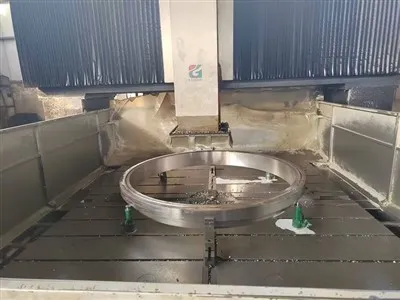
First up: dimensional nonconformity. This is the most frequent defect I see, and it’s usually avoidable. AWWA standards (specifically AWWA C207 for steel flanges) mandate precise measurements for bolt circle diameter, flange thickness, hub length, and bolt hole spacing—all within tight tolerances. I once had a client come to me with a set of flanges from a smaller supplier that had bolt holes spaced 1/8-inch off the mark. Their crew spent four hours on site trying to force bolts in, and half the holes wouldn’t align at all. The result? They had to cut the pipe section out and re-fit, costing thousands in labor and lost productivity. Some smaller manufacturers cut corners on machining to speed up production, using old, worn tooling that drifts over time. Even minor dimensional errors—like a flange being 1/16-inch thinner than required—can weaken its load capacity, especially for large-diameter lines (24 inches or bigger) that handle high pressure. Another common dimensional miss: non-concentric bolt holes. If a hole is drilled slightly off-center, the bolt will bind or stretch unevenly when tightened, leading to partial pressure loss even if the joint seems tight. I’ve caught this in my own inspection process before shipping; every lot of flanges we send gets a random dimensional check, and we’ve turned back shipments with off-center holes rather than risk sending a bad part to a customer.
Next, material defects that violate AWWA specs. AWWA flanges aren’t one-size-fits-all. For example, AWWA C207 Class B flanges use carbon steel with a minimum tensile strength of 60,000 psi, while Class E flanges (for high-pressure transmission mains) require higher-grade steel with better corrosion resistance. But some manufacturers use scrap steel or substandard alloy to cut costs, resulting in flanges that are too brittle or too soft. Brittle flanges are a disaster for cold-climate piping—last winter, a municipal water department in northern Indiana called me in because a batch of untested flanges cracked when it was tightened below 32 degrees. The problem? The steel they were made from had insufficient impact resistance, per AWWA’s Charpy V-Notch test requirements. On the opposite end, flanges that are too soft will deform under bolt torque. When you tighten a bolt to the recommended torque (per AWWA C111), a properly made flange will hold its shape; a soft one will compress slightly around the hole, leading to gaps that leak. Corrosion is another material-related defect, even on “new” flanges. Some suppliers skip the required rust protection for carbon steel flanges, leaving the surface pitted before it even leaves the factory. Pitting creates weak points that can corrode faster once the line is pressurized, especially in areas with hard water or high mineral content. I always recommend that our customers order flanges with a hot-dip galvanized coating, as specified by AWWA, to prevent this—though I’ve had clients tell me they skipped that add-on to save money, only to deal with leaks six months later.
Surface and finish defects are often overlooked but just as critical. AWWA flanges need a smooth, flat seating surface to create a watertight seal between the flange face and the pipe gasket. If the seating surface has scratches, gouges, or unevenness from rough machining, the gasket won’t compress evenly, leading to micro-leaks that can turn into big problems over time. I once had a contractor bring in a set of flanges with deep scratches on the face, caused by mishandling during shipping. Their initial thought was to just lap the surface on site, but we tested it and found the scratches were too deep—lapping would have removed too much material, weakening the flange. Instead, we swapped them out, avoiding a potential line failure during peak summer demand. Another finish defect: incomplete welds on hubbed flanges. Most AWWA flanges have a hub that’s welded to the pipe; if the weld isn’t full penetration, has porosity, or is under-sized, the flange can separate from the pipe under pressure. I’ve seen this happen in a wastewater treatment plant’s main effluent line—luckily, it was caught during a pressure test before the line went live, but it would have flooded the plant if it had failed. Some smaller manufacturers use tack welds instead of full, continuous welds to speed up production, and that’s a violation of AWWA C208’s welding requirements for steel flanges. Don’t get me wrong—AWWA standards are strict for a reason, but not all suppliers follow them. We always do x-ray inspections on 10% of every weld batch to make sure there are no hidden defects.
Finally, installation-preparation defects that are sometimes blamed on the flange, not the manufacturer. Wait—you might be thinking, “That’s not a flange defect, that’s an installation mistake.” But I see this often enough that it’s worth calling out, because many suppliers (including some of my competitors) don’t include proper inspection guides with their flanges. One common issue: missing or incorrect gasket seating. AWWA flanges require specific gaskets (usually EPDM for water lines, but sometimes nitrile for industrial chemicals) that match the flange’s pressure rating. If a flange arrives with no gasket, or a gasket that’s too thin, it doesn’t matter how well the flange is made—the joint will leak. Another installation-related defect: over-torquing bolts. AWWA specifies a torque range for each bolt size and flange class, but some crews cranks bolts as tight as they can, thinking that’s safer. Over-torquing can warp the flange face, bend the hub, or snap bolts—all of which create defects in the flange’s performance. I once had a customer who returned a set of perfectly made flanges claiming they were defective, only to discover their crew had torqued the bolts 30% above the recommended limit. The flanges weren’t warped when they left us, but over-torquing did it on site. To prevent this, I always tell my customers to request our installation guide—included free with every order—that outlines proper torque values, gasket selection, and pre-installation checks.

At the end of the day, the biggest mistake people make when it comes to AWWA flanges is assuming that all suppliers are equal. I’ve seen flanges priced 20% lower than ours, but those lower prices usually come with corners cut in quality control, material testing, and machining. We’ve built our business by standing behind every flange we sell—if a customer finds a defect, we replace it, no questions asked, and we’ve never had a flange fail in service because of a manufacturing defect (knock on wood) in 12 years. If you’re planning a project and want to avoid the hassle of dealing with defective flanges, let’s talk. We can walk through your specifications, confirm the right flange class and material for your application, and make sure every part arrives to your site tested and ready to install. Don’t wait until a leak shuts down your line or costs you thousands in repairs—reach out to us to discuss your AWWA flange needs today.
Gost 33259 Flange References
AWWA C207-22, Steel Pipe Flanges for Water Works Service. American Water Works Association, 2022.
AWWA C111-21, Flanged Fittings for Water and Other Fluids. American Water Works Association, 2021.
ASTM A53/A53M-22, Standard Specification for Pipe, Steel, Black and Hot-Dipped, Zinc-Coated, Welded and Seamless. ASTM International, 2022.
Shanxi Xinshunda Flange Manufacturing Co., Ltd.
As one of the most professional awwa flange manufacturers and suppliers in China, we also support customized service with competitive price. We warmly welcome you to wholesale high quality awwa flange for sale here from our factory. For quotation, contact us now.
Address: Zhunagli Industrial Zone,jinchang Town,dingxiang,shanxi,china
E-mail: sales01@xinflange.com
WebSite: https://www.xinflange.com/
