Hey everyone, it’s Jake here from your go-to Camlock coupling supplier—over the last 12 years, I’ve answered more “wait, how do I actually measure this thing?” calls and emails than I can count. Most of those messages came from new guys in fluid transfer, plant maintenance, or even small-time farmers setting up irrigation systems, all staring at a pile of Camlock parts wondering why their old replacement doesn’t fit, or why the new one they ordered leaks like a sieve. Let’s cut through the confusion today: I’m walking you through exactly how to measure a Camlock coupling, step by step, with all the tricks I’ve picked up in the field that never made it into the manual. Camlock Coupling
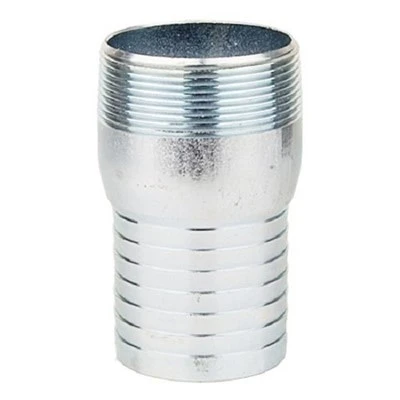
First, let’s get one thing straight: Camlock couplings (sometimes called cam and groove couplings, for the fancy folk) don’t use just one size measurement. You’ve got three core specs that matter more than anything: inner diameter (ID), outer diameter (OD), and the hose shank size, plus a few secondary ones like the thread type if you’re working with NPT or BSP connections. Mess up any of these, and you’re throwing money away on parts that won’t lock, seal, or work when you need them most. I’ve seen a guy order a 2-inch Camlock for his chemical transfer line, show up to install it, and realize the shank was a quarter-inch too narrow—he had to drive 45 minutes to a supply shop mid-shift, holding up production. Let’s make sure that doesn’t happen to you.
Start with the basics: the inner diameter. This is the opening through the center of the coupling, the part where the fluid actually flows. It’s the single most common number suppliers use to label Camlocks, and for good reason—2-inch Camlock means a roughly 2-inch ID, right? But here’s the catch: for most Camlock types, that ID’s not an exact whole number. A 2-inch aluminum Camlock from our stock has an ID that runs between 2.06 and 2.10 inches, which is standard for the industry. To measure this, you can’t just guess—use a digital caliper, not a ruler. Rulers are fine for woodworking, but Camlock tolerances are tight; a millimeter off can mean a loose fit. Open the coupling’s grooves (the notches where the cam arms sit) and slide the caliper jaws right across the center of the ID, squeezing gently until they touch both sides. Write that number down—this is your baseline size, what you’ll reference when picking the right part. If you get a number that’s somewhere between a 1.5 and 2-inch, don’t panic; that just means it’s an odd size, common in custom setups. Bring that number to a supplier, and they can match it to their inventory.
Next up: the outer diameter of the coupling’s body. Wait, why do you need this? Because your fitting’s mounting location—like a hole in a tank or a flange on a pump—needs to be big enough to fit the coupling. If the OD is too wide, it won’t seat properly, and if it’s too narrow, you’ve got space that can cause leaks when you tighten the cam arms. Grab that same digital caliper, flip it to measure OD, and clamp the jaws around the widest part of the coupling’s main body, making sure you measure flat against the sides, not the edges of the cam arms (those stick out, and they’re not part of the body size). For example, a 3-inch Type B Camlock we supply has an OD of about 3.75 inches, so if you’re cutting a hole for it in a water tank, you need to mark a 3.75-inch circle, not a 3-inch one. I once had a construction client tell me he cut a 3-inch hole for a Camlock, and spent three hours sanding and reaming it because he didn’t measure the OD—don’t make that mistake.
Then there’s the hose shank size, the part that slides over your hose or pipe and clamps down with a worm gear clamp or a safety wire. This is the make-or-break measurement for a tight, secure fit. If your hose is 1.5-inch ID, you need a Camlock with a matching 1.5-inch shank—simple, right? But again, tolerances matter. A 1.5-inch shank should measure between 1.51 and 1.55 inches, to snug up against the inside of your hose. If you use a 1.6-inch shank on a 1.5-inch hose, you’ll stretch the hose too thin, and it’ll crack under pressure. If you use a 1.4-inch shank, it’ll slide around, and the hose could pop off mid-transfer. To measure shank size, place your caliper at the end of the shank (the part that goes into the hose) and measure across its diameter. If you’re working with a pipe thread end instead of a shank (that’s Type A and Type F Camlocks, for reference), you’ll need to measure the thread size. For NPT threads, use a thread pitch gauge to count threads per inch—most industrial 1-inch NPT has 11.5 threads per inch, for example. If you’re not familiar with NPT vs BSP, just send us a photo of your thread and we’ll ID it for you—no extra charge, that’s part of our customer service.
Wait, let’s not forget a few secondary measurements that save you headache. First, the overall length of the assembled coupling. If you’re working in a tight space, like under a trailer or in a cramped pump bay, a standard Camlock might be too long, so a compact design is what you need. Measure from the very tip of the shank or thread end to the farthest point on the opposite end, and that’ll tell you if it’ll fit in your space. Second, the cam arm height—this matters if you’re going to stack couplings or need them to fit under a lid, but it’s usually only a factor for custom installations, not standard ones.
Let me walk you through a real example that happened to a customer of mine last month. A small dairy farm owner named Mike called me in a panic—he’d bought a bulk milk tank and needed a new Camlock to connect his transfer hose to the tank, but the old one he removed had no labels. He’d measured the ID as ~1.9 inches, so he ordered a 2-inch Camlock, and when it arrived, the shank was too big to fit his 1.85-inch ID hose. We walked through the steps together: he measured the shank of the old coupling, which was exactly 1.875 inches, so he matched it to a 1.875-inch shank Camlock (we carry custom sizes for just this reason), and the new one fit perfectly. No leaks, no delays, he was back transferring milk in 10 minutes. That’s why these measurements matter—when the parts don’t fit, it’s not just a hassle, it can cost you thousands in downtime for farms, manufacturing plants, and construction sites.
Now, a pro tip I’ve learned after 12 years in this business: always cross-reference multiple measurements. Don’t just go off the ID from the old coupling—measure the shank too, because some old Camlocks wear down over time, so the ID might be slightly off. For example, a 2-inch Camlock that’s been used for five years might have an ID that’s stretched to 2.15 inches, so if you just order a 2-inch one, the new ID will be slightly smaller and the shank might not match the old hose. That’s why cross-measuring is non-negotiable.
Another thing: Camlock couplings are made for different applications, so the size isn’t the only factor, but it’s the most important first step. If you’re transferring gasoline, you might need an aluminum Camlock, while for chemical transfer, maybe a polypropylene or stainless steel one—but that’s a conversation for another day. Right now, we’re talking about measurements to make sure the part fits.
Let’s recap, so you don’t have to scroll back: 1) Measure ID with a digital caliper to confirm flow size. 2) Measure OD to make sure it fits your mounting hole. 3) Measure shank size (or thread size for end connections) to match your hose or pipe. 4) Take overall length if space is tight. Simple, right?
If you’re still not sure, or you’re measuring a custom size, don’t guess—send us your measurements. We’ve got a team of experts on hand to help you pick the right Camlock every time, no matter your industry. We carry Type A through Type F Camlocks, in aluminum, stainless steel, polypropylene, and brass, so we’ve got parts for every job from residential irrigation to industrial chemical transfer. No matter what you’re working on, we’ll make sure you get the right size, no returns, no delays, no headaches.
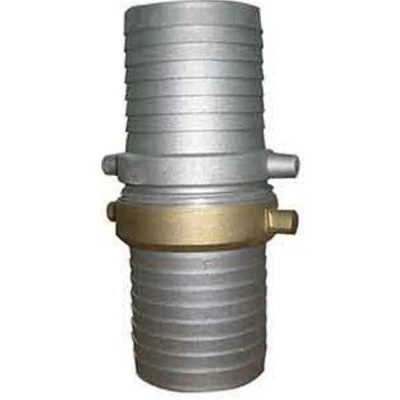
If you’re looking to stock up or place an order, just reach out to our team to discuss your specific needs. We’re here to help you get the job done right, the first time.
KC Nipple References:
Cam and Groove Couplings: Selection, Installation, and Maintenance. National Fluid Power Association. 2021.
Industrial Hose Couplings: Camlock Specifications and Tolerances. Hydraulics & Pneumatics Magazine. 2022.
Guide to Measuring Camlock Couplings for Proper Fit. Process Industry Practices. 2020.
Suzhou Fuyikang Metal Industrial Co., Ltd.
As one of the most professional camlock coupling manufacturers and suppliers in China, we have world-leading production equipment and strong manufacturing capabilities. We warmly welcome you to buy bulk high quality camlock coupling for sale here from our factory.
Address: No.26.Mudong Rd,Mudu Town, Wuzhong Distric, Suzhou City,Jiangsu Province,China
E-mail: SZFYK@SZFUYIKANG-COUPLING.COM
WebSite: https://www.fyk-coupling.com/
