If you’ve ever stood beneath a towering power transmission line, watching steel latticework stretch over hills and valleys to carry electricity to homes and businesses, you might not think about the thousands of checks and tests that happened before that tower was ever bolted into the ground. As a power transmission tower supplier, my team and I don’t just ship metal frames—we ship the backbone of the grid, and quality control isn’t just a step in our process, it’s the promise we make to every utility that relies on our towers. Over the 12 years we’ve been in business, we’ve learned that cutting corners on QC doesn’t just lead to a failed tower—it leads to blackouts, repair costs no one wants to cover, and trust that takes years to rebuild. Let’s break down the quality control measures we live by, because when it comes to transmission towers, there’s no such thing as “good enough.” Power Transmission Towers

First, we start at the very beginning: raw material inspection. Transmission towers are almost always made of hot-dip galvanized steel, for good reason—steel is strong, and galvanization protects it from rust and corrosion that would eat through it in rain, snow, salt air, or the humidity of coastal regions. But not all steel is created equal. We source our steel from certified mills, and our QC team doesn’t just take the mill’s paperwork at face value. Every batch of steel we receive gets tested on our loading dock. We use a Spectrometer to analyze the chemical composition of steel samples—checking for the right amounts of carbon, manganese, silicon, and other elements that make it strong enough to hold the weight of conductors, insulators, and even wind and ice loads. We also test the tensile strength of each steel beam with a tensile testing machine, pulling samples until they break to confirm they meet ASTM standards (the gold standard for transmission tower materials). Last year, we had a batch of steel come in that had a slightly higher sulfur content than required. Our dock inspector flagged it immediately, sent it back, and avoided a potential disaster—sulfur makes steel brittle, and a tower made with that steel could crack under extreme loads. That’s the kind of small, unglamorous check that saves everyone big problems later.
Next up is fabrication line quality control. Once the steel is cut, bent, drilled, and formed into tower components (like legs, cross-arms, and lattice bars), every part goes through a series of checks before it leaves the fabrication floor. First, dimensional accuracy is non-negotiable. Even a 1/8-inch mistake in a drill hole or a beam length can mean a tower that won’t fit together on-site, requiring costly rework or time delays. We use laser measuring tools and precision calipers to verify every dimension, from the diameter of a bolt hole to the angle of a lattice joint. We also follow strict tolerance guidelines—our engineers set tolerances to match the specific project requirements, but we never allow a tolerance that could compromise safety. For example, on a 220kV transmission line project we did for a utility in the Midwest last year, we had a set of cross-arms that were cut 1/16 inch too short. Our team caught it during a mid-shift inspection, pulled the parts, and re-cut them before they moved on to drilling. That 10-minute delay for our team meant the utility didn’t have to wait an extra day for their towers when they needed to beat a spring thaw deadline.
Then there’s the drilling and threading process—another critical step. Bolted connections are the joints that hold a tower together, so if a drill hole is misaligned, or a bolt isn’t threaded correctly, the joint can loosen over time, leading to structural failure. We use CNC drilling machines for most precision holes, which are controlled by computer to ensure accuracy, but even then, our inspectors spot-check every 20th hole on large batches to confirm alignment. We also use thread gauges on all bolt threads to make sure they meet the correct pitch and depth. For parts that need to be galvanized after fabrication, we also do a pre-galvanization check: we wash all steel parts to remove oil, grease, and any debris that would leave gaps in the galvanized coating, and we inspect edges and corners to make sure sharp metal hasn’t been left exposed (those spots would corrode faster, and we fix them before sending parts to the galvanizer).
Speaking of galvanization—this is one of the most important quality control steps, because a bad galvanization job can turn a steel tower into a rust bucket in just a few years. We work only with galvanizers that have ISO 9001 certification, but we still have our own third-party inspectors on-site at the galvanizing plant for every batch of our towers. What do we check there? First, the zinc coating thickness. We use a magnetic thickness gauge to test at least three points on every component—thickness needs to be at least 85 microns for most transmission towers, more for coastal or high-humidity areas. If the coating is too thin, it won’t protect the steel. We also check for “zinc spangles” (small, shiny zinc crystals) that indicate a good metallurgical bond between zinc and steel—if the spangles are missing, the coating is probably peeling or flaking, which is a failure. Last year, a galvanizer tried to cut corners by using a lower grade zinc, resulting in a coating that was only 60 microns thick. Our inspector rejected the entire batch, and the galvanizer had to re-do the job at their cost. That’s why we don’t just trust the galvanizer’s reports—we see it for ourselves.
After galvanization, we do what we call a “post-fabrication final inspection.” Every tower leg, cross-arm, and lattice section is checked for any damage that happened during galvanizing or shipping prep—like dents, scratches, or missing zinc spots. For missing zinc spots (which can happen if a part was touched while hot), we use a zinc-rich touch-up paint that meets ASTM standards, and we re-inspect the spot to make sure it’s fully covered. We also mark every component with a permanent serial number, so we can trace every part back to its raw material batch and fabrication shift—another layer of accountability we offer our clients. If a part ever has an issue, we can pull the records and figure out exactly what went wrong, so we can fix it for future projects.
Once all individual components are done, we do a full load testing for every tower design. Wait—no, not a full tower test for every single tower we ship, that would be too expensive and time-consuming. But for every new tower design, or for designs that are modified for a specific project (like taller towers or towers in high-wind areas), we build a prototype and run structural load tests in our in-house testing lab. Our lab uses hydraulic jacks to apply loads that are 120% of the project’s design requirements (that extra 20% is our safety buffer) to make sure the tower doesn’t bend, crack, or collapse. We track every strain on every beam and joint with strain gauges, and we document every data point for our clients. Last year, we designed a new tower for a project in Wyoming that needed to withstand 110 mph winds (higher than our standard 90 mph). We built a prototype, tested it to 132 mph (120% of the design load), and it passed with zero issues. The utility was impressed, and that prototype’s test data helped them get approval from state regulators for their project—something they couldn’t have done without that third-party verified testing.
We also have a quality management system (QMS) that we’ve refined over the years, certified to ISO 9001. That means every step of our QC process is documented—raw material receipts, test results, inspection reports, load test data, even the name of the inspector who checked a specific part. We don’t just keep these records for ourselves—we share full QC packages with every client before shipping their towers. That package includes photos of raw material tests, galvanization reports, dimensional inspection data, and load test results. Our clients—utility engineers, project managers, and procurement teams—don’t have to guess if our towers are built to last; they have the paperwork to prove it.
Now, I know what some of you might be thinking: “This all sounds good, but is this just for big projects?” No, it’s for every project, from a small 11kV line serving a rural town to a 500kV superhighway connecting entire regions. Last year, we worked with a small municipal utility in Ohio that was upgrading their local distribution line. They only needed 12 towers, but we put the same QC process in place for those 12 as we do for a 100-tower project in Texas. Their project manager told us later that the reason they chose us over a cheaper supplier was because our QC package was more detailed than anyone else’s—they didn’t want to deal with a tower that wouldn’t hold up to Ohio’s harsh winters.
Here’s the hard truth about transmission towers: when they work, no one notices them. But when they fail, the effects are widespread—hours of blackouts, millions of dollars in lost revenue, and dangerous situations for line workers who have to climb broken towers to make repairs. That’s why QC isn’t a “cost center” for our business—it’s our core. Every time we catch a mistake before a tower leaves our facility, we’re protecting the people who rely on the grid. Every time we test a raw material sample, we’re investing in the reliability of the entire electrical system.
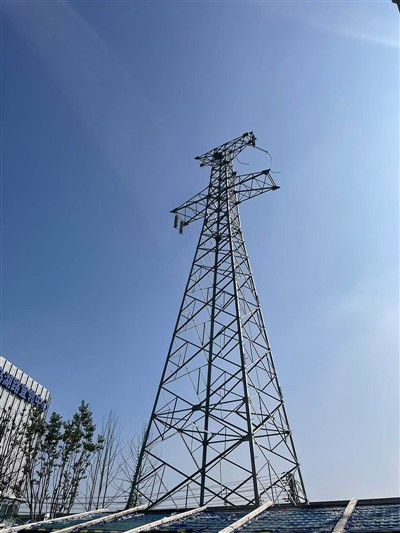
If you’re a utility engineer, project manager, or procurement specialist who needs transmission towers that are built to last, with a QC process that’s transparent and proven, we’re here to help. We don’t cut corners, we don’t skip tests, and we don’t ship anything that wouldn’t hold up on our own property. For more details on our tower designs, QC processes, or to start a conversation about your next project, don’t hesitate to reach out.
Power Transmission Towers References
- ASTM A36/A36M-21, Standard Specification for Carbon Structural Steel
- ISO 9001:2015, Quality management systems — Requirements
- NESC (National Electrical Safety Code) 2023, Part 2: Rules for the Design of Lines and Structures
- ASTM A123/A123M-21, Standard Specification for Zinc (Hot-Dip Galvanized) Coatings on Iron and Steel Products
Hebei Yifeng Steel Structure Co., Ltd.
As one of the most professional power transmission towers manufacturers and suppliers in China, we offer a wide range of products with superior quality. Please feel free to buy cost-efficient power transmission towers for sale here from our factory. Contact us for more details.
Address: Guangchuan Town Industrial Zone, Jing County, Hengshui City, Hebei Province
E-mail: hbyfgjg@163.com
WebSite: https://www.yf-powertowers.com/
