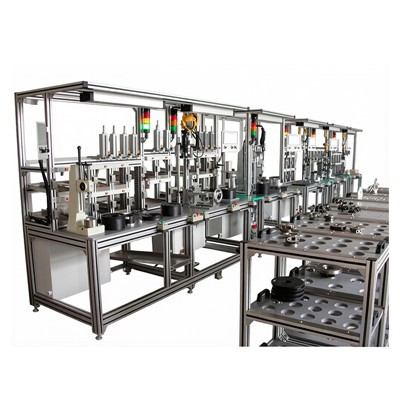
As a supplier of specialized equipment, I understand the critical importance of safety certifications in today’s market. Not only do they ensure the safety and reliability of our products, but they also provide a competitive edge, helping us to build trust and credibility with our customers. In this blog, I will explore the various safety certifications relevant to specialized equipment, delving into their significance, application processes, and the impact they have on our business. Specialized Equipment
Understanding the Importance of Safety Certifications
Safety certifications are official documents issued by recognized third – party organizations, confirming that a product meets specific safety and quality standards. For specialized equipment, these certifications are non – negotiable. They serve as a guarantee to end – users that the equipment has been rigorously tested and meets or exceeds the safety requirements of the industry.
One of the primary reasons for obtaining safety certifications is to comply with the law. Different countries and regions have their own set of regulations regarding the safety of equipment. For example, in the European Union, the CE marking is a mandatory safety certification for many types of specialized equipment. This marking indicates that the product conforms to health, safety, and environmental protection standards set by EU directives. Failing to comply with these regulations can result in hefty fines, product recalls, and damage to the company’s reputation.
Beyond legal compliance, safety certifications also enhance the marketability of our specialized equipment. Customers are increasingly cautious when purchasing equipment, especially those with high – risk applications. A product with recognized safety certifications is more likely to be chosen over a non – certified one. It gives customers peace of mind, knowing that the equipment they are investing in has passed strict safety tests.
Common Safety Certifications for Specialized Equipment
There are several well – known safety certifications that are relevant to specialized equipment suppliers. Let’s take a closer look at some of them:
1. CE Marking (European Union)
As mentioned earlier, the CE marking is a crucial certification for selling specialized equipment in the European Economic Area (EEA). It consists of the letters "CE," which is an abbreviation of the French phrase "Conformité Européene," meaning European Conformity.
To obtain the CE marking, suppliers must demonstrate that their products comply with the relevant EU directives. This often involves a series of tests, including mechanical safety, electrical safety, and electromagnetic compatibility. The process typically includes the following steps:
- Identification of applicable directives: Suppliers need to determine which EU directives apply to their specialized equipment. For example, if the equipment is electrical, the Low Voltage Directive (LVD) might apply, while the Machinery Directive is relevant for mechanical equipment.
- Technical documentation: A comprehensive technical file must be prepared, including product design specifications, test reports, and instructions for use.
- Conformity assessment: Depending on the complexity of the equipment, the assessment can be carried out by the manufacturer or a notified body. Notified bodies are independent organizations authorized by EU member states to conduct conformity assessments.
- Affixing the CE marking: Once the product is deemed compliant, the CE marking can be affixed to the equipment.
2. UL Certification (United States)
Underwriters Laboratories (UL) is a well – respected independent safety science company in the United States. UL certification is widely recognized as a symbol of safety and quality. UL conducts a wide range of tests on specialized equipment, covering areas such as fire safety, electrical safety, and chemical safety.
The process of obtaining UL certification involves:
- Application: The supplier submits an application to UL, along with detailed information about the product, including its design, materials, and intended use.
- Product testing: UL tests the product in its laboratories according to relevant standards. The tests are designed to simulate real – world conditions and identify any potential safety hazards.
- Factory inspection: For products that pass the initial testing, UL may conduct factory inspections to ensure that the manufacturing process maintains the same level of safety as the tested sample.
- Certification issuance: If the product meets all the UL requirements, UL issues a certification, indicating that the product is safe for use in the US market.
3. CSA Certification (Canada)
The Canadian Standards Association (CSA) issues certifications for specialized equipment used in Canada. Similar to UL and CE, CSA certification involves rigorous testing and evaluation to ensure that the product complies with Canadian safety standards.
The steps for obtaining CSA certification are similar to those of other certifications:
- Standard selection: The supplier identifies the relevant CSA standard for their equipment.
- Product evaluation: The product is tested in a CSA – approved laboratory to assess its compliance with the standard.
- Audit and monitoring: After the product is certified, CSA may conduct periodic audits to ensure ongoing compliance.
The Impact of Safety Certifications on Our Business
As a specialized equipment supplier, obtaining safety certifications has a profound impact on our business. First and foremost, it has allowed us to expand our market reach. With CE, UL, and CSA certifications, our products can be sold in the European Union, the United States, and Canada. This has opened up new opportunities for growth and increased our customer base.
Certifications have also improved the quality of our products. The rigorous testing and evaluation processes involved in obtaining certifications have forced us to continuously improve our manufacturing processes and product design. This has not only enhanced the safety of our equipment but also increased its reliability and performance.
Moreover, safety certifications have helped us to build strong relationships with our customers. Our customers appreciate the fact that we take safety seriously and that our products are backed by recognized certifications. This has led to increased customer loyalty and repeat business.
Challenges in Obtaining Safety Certifications
While safety certifications bring many benefits, the process of obtaining them is not without its challenges. One of the main challenges is the cost. The testing, evaluation, and assessment required for certifications can be expensive, especially for small and medium – sized suppliers. For example, the fees charged by notified bodies for CE conformity assessment can be quite substantial.
Another challenge is the time – consuming nature of the certification process. From submitting the application to final certification issuance, it can take several months, or even longer in some cases. This can delay product launches and put pressure on our business operations.
In addition, the complexity of regulations can be overwhelming. Different certifications have different requirements, and keeping up with the latest regulatory changes can be a daunting task. For example, the EU directives are constantly being updated, and suppliers need to ensure that their products are always compliant.
Conclusion and Call to Action
In conclusion, safety certifications are an essential part of the specialized equipment industry. They ensure product safety, legal compliance, and market competitiveness. As a supplier, we are committed to obtaining and maintaining the highest – level safety certifications for our specialized equipment.
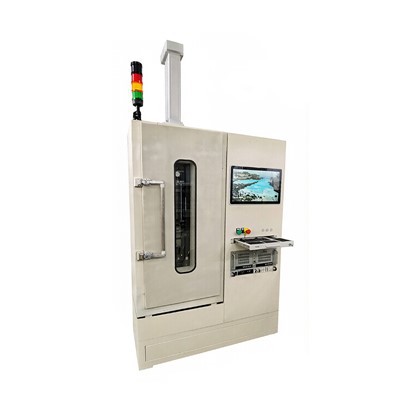
Hydraulic Industry Production Equipment If you are in the market for high – quality, certified specialized equipment, we invite you to contact us for a procurement discussion. Our team of experts is ready to provide you with detailed information about our products, certifications, and pricing. We look forward to working with you to meet your specialized equipment needs.
References
- European Union official documentation on CE marking directives.
- Underwriters Laboratories (UL) official standards and guidelines.
- Canadian Standards Association (CSA) official publications.
Shanghai Zenyan Automation Engineering Co., Ltd.
As one of the leading specialized equipment manufacturers in China, we warmly welcome you to buy advanced specialized equipment made in China here from our factory. All customized machines are with high quality and low price. Contact us for quotation.
Address: 3rd Floor, Building A, No.5629 Beisong Road, Chedun Town, Songjiang District, Shanghai, China
E-mail: zenyan_sh@163.com
WebSite: https://www.zenyanauto.com/
