In the ever – evolving landscape of telecommunications and data centers, optical modules stand at the forefront of technological innovation. As a dedicated supplier of optical modules, I am constantly immersed in the latest advancements that are shaping the future of high – speed data transmission. This blog aims to delve into some of the most exciting and game – changing technological breakthroughs in optical modules today. Optical Module
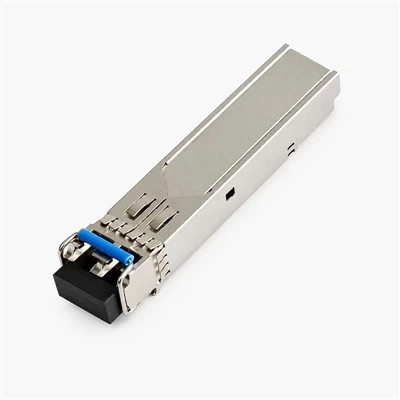
1. Improved Transmission Rates
One of the most significant advancements in optical modules is the remarkable increase in transmission rates. The demand for higher – speed data transfer has been driven by the rapid growth of cloud computing, big data analytics, and 5G networks. In recent years, we have witnessed the transition from traditional 10G and 40G modules to 100G, 200G, and even 400G and 800G modules.
The development of 400G optical modules has been a major milestone. These modules are designed to support the extreme data traffic requirements of large – scale data centers. They utilize advanced modulation techniques, such as PAM4 (Pulse Amplitude Modulation 4 – level). PAM4 effectively doubles the data – carrying capacity of a single optical channel compared to the traditional NRZ (Non – Return – to – Zero) modulation. It encodes two bits of data per symbol instead of one, enabling faster data transfer without the need for a proportionate increase in the bandwidth.
Meanwhile, 800G optical modules are rapidly emerging as the next frontier. These high – speed modules are expected to meet the future demands of hyperscale data centers, where the volume of data traffic is projected to skyrocket. The development of 800G modules requires a combination of innovative component design, advanced packaging techniques, and optimized signal processing algorithms. For example, some 800G modules use a combination of multiple PAM4 lanes to achieve the desired high – speed transmission.
2. Energy Efficiency Improvements
Energy consumption has become a critical concern in the data center industry. Optical modules, being an integral part of data transmission systems, are no exception. Recent technological advancements have focused on reducing the power consumption of optical modules without sacrificing performance.
One approach is the use of more efficient semiconductor materials. For instance, silicon photonics has emerged as a promising technology. Silicon – based photonic components can be fabricated using standard complementary metal – oxide – semiconductor (CMOS) manufacturing processes, which are well – established and cost – effective. Silicon photonics enables the integration of multiple optical and electrical functions on a single chip, reducing the overall power consumption of the module.
Another strategy is the development of intelligent power management systems in optical modules. These systems can dynamically adjust the power consumption of the module based on the actual data traffic. For example, during periods of low traffic, the module can automatically enter a low – power mode, reducing energy consumption. When the traffic increases, the module can quickly ramp up to full performance.
3. Enhanced Coherent Technology
Coherent technology has long been used in long – haul optical communication systems, but recent advancements have made it more accessible and applicable in a wider range of scenarios. Coherent optical modules offer several advantages, including high spectral efficiency and long – distance transmission capabilities.
In modern coherent optical modules, digital signal processing (DSP) algorithms have been significantly improved. DSP algorithms are used to compensate for various transmission impairments, such as chromatic dispersion, polarization – mode dispersion, and nonlinear effects. With the development of more powerful and efficient DSP chips, coherent modules can achieve better performance with lower complexity.
Moreover, the integration of coherent technology into smaller form – factor modules has expanded its application scope. For example, compact coherent pluggable (CCP) modules have been developed, which are suitable for use in metropolitan and data center interconnect (DCI) environments. These modules combine the high – performance features of coherent communication with the convenience of pluggable form factors.
4. Miniaturization and Higher Density
As data centers continue to grow, the need for higher – density optical connections has become increasingly important. Technological advancements have enabled the miniaturization of optical modules while increasing their port density.
The development of smaller form – factor pluggable (SFP) module variants, such as SFP+ and QSFP (Quad Small Form – factor Pluggable), has been a key step in this direction. These modules offer a high – speed data interface in a compact package, allowing for more modules to be installed in a limited space. For example, QSFP28 modules support 25G per lane and can provide a total data rate of up to 100G, making them suitable for high – density data center applications.
In addition, the industry is also exploring even smaller and more power – efficient module designs. For instance, the emerging OSFP (Octal Small Form Factor Pluggable) and CFP (C form – factor pluggable) module families are designed to support higher data rates and greater port densities. These modules are expected to play a crucial role in future high – performance data centers.
5. Integration of AI and Machine Learning
Artificial intelligence (AI) and machine learning (ML) are increasingly being integrated into optical modules to improve their performance and reliability. AI and ML algorithms can be used for various purposes, such as monitoring the health of the optical module, predicting failures, and optimizing the transmission performance.
For example, machine learning algorithms can analyze the performance data of an optical module, such as the bit – error rate, optical power, and temperature, to detect early signs of failure. By predicting potential failures, data center operators can take proactive measures, such as replacing the module before it breaks down, reducing downtime and maintenance costs.
AI can also be used to optimize the transmission parameters of the optical module. For instance, in a dynamic network environment, an AI – enabled optical module can adjust its modulation format, transmission power, and other parameters in real – time to adapt to changing network conditions, ensuring the best possible transmission performance.
Conclusion
The latest technological advancements in optical modules are revolutionizing the telecommunications and data center industries. The improvements in transmission rates, energy efficiency, coherent technology, miniaturization, and the integration of AI and machine learning are driving the development of more powerful, reliable, and cost – effective optical communication systems.
As a leading supplier of optical modules, we are committed to staying at the forefront of these technological trends. We continuously invest in research and development to bring the latest innovative products to the market. Whether you are a data center operator, a telecommunications service provider, or involved in other high – speed data transmission applications, our optical modules can meet your needs.

If you are interested in purchasing our high – quality optical modules or would like to discuss your specific requirements, please feel free to contact us. We look forward to the opportunity to work with you and contribute to the success of your projects.
Infrared LED Emitters References
- "Optical Fiber Communication Technology Handbook"
- IEEE Journal on Selected Areas in Communications
- OSA (Optical Society of America) Publications
Zhejiang Chengmei Technology Co., Ltd.
As one of the most professional optical module manufacturers and suppliers in China, we’re featured by quality products and good price. Please rest assured to wholesale bulk premium optical module made in China here from our factory. Also, quotation is available.
Address: No. 383, Jinhe Road, Qinshan Street Industrial Park, Haiyan County, Jiaxing City, Zhejiang Province
E-mail: shiwei@cm-semi.com
WebSite: https://www.cmfiber.com/
