Hey there, let’s cut to the chase—if you work with wear-resistant parts, you probably already know they’re game-changers for keeping machinery running longer, cutting downtime, and saving you money. But here’s the thing that most folks don’t think about until it’s too much of a headache: how do these parts hold up when you’re operating in a vacuum? I’m not some lab coat guy spouting jargon without proof—I’ve been selling wear-resistant parts for over a decade, fielding calls every week from folks in aerospace, semiconductor manufacturing, and even deep-space component testing panicking because their parts crapped out mid-run. So let’s talk real talk about vacuum environments, what breaks parts there, and how our stuff stands up when the pressure’s on. Wear Resistant Parts
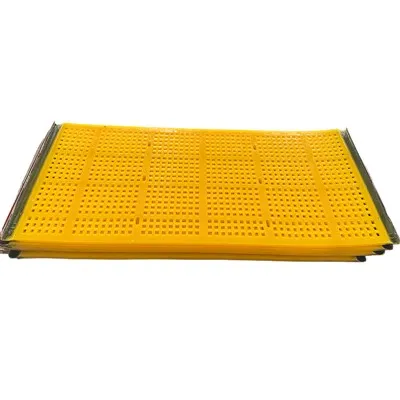
First, let’s nail down what a vacuum actually does to wear-resistant parts, because it’s nothing like the air you breathe every day. In regular atmosphere, there’s this thing called “boundary lubrication”—the thin layer of air molecules between two moving parts that actually keep metal from grinding directly against each other. But in a vacuum? That layer is gone. No air, no lubricity from the air, just two hard surfaces slamming and sliding against each other, with nothing to catch the friction. I’ve seen it happen first-hand: a semiconductor factory client a couple years back was testing their wafer transfer arms in a vacuum chamber, and their generic carbon-alloy bearings seized up in 12 hours flat. They thought they bought “wear-resistant” stuff, but it was useless because the supplier didn’t account for vacuum-specific wear mechanisms.
Wait, let’s get specific on those mechanisms—because that’s where most wear parts fail, not just because of friction. There’s “adhesive wear” in a vacuum, right? When two metal surfaces touch, small bits of one part weld onto the other (called “cold welding,” because there’s no heat needed—just pressure and no air to stop the atoms from bonding). In air, that’s not a big deal because the oxide layer on metal stops cold welding, but in a vacuum? That oxide layer’s gone too. Then there’s “abrasive wear,” but not the regular kind—grit from regular air. In a vacuum, it’s wear particles from the part itself, because when parts grind, they shed tiny shavings that act like sandpaper between the moving surfaces. And don’t even get me started on “fatigue wear”—cycle parts enough, and in a low-pressure environment, the stress cracks don’t get any oxygen to heal, so they spread faster until the part breaks.
Here’s where our experience comes in, because we don’t just sell stock wear parts—we tune them for vacuum environments. Let’s break down what we adjust, since that’s why our parts don’t seize up like the competition’s. First, we swap out generic carbides and alloys for materials that don’t cold weld. Take our vacuum-grade tungsten carbide bearings, for example—we infuse them with a solid lubricant that doesn’t off-gas in a vacuum (off-gassing is another big one—if a part lets out fumes in a vacuum chamber, those fumes can contaminate whatever you’re working on, like semiconductor wafers). That lubricant doesn’t rely on air, so it keeps the two surfaces separated even when there’s zero atmospheric pressure.
Another trick we use is surface finishing. Most standard wear parts get a basic polish, but for vacuum applications, we do a “superfinish” that gets the surface down to a micro-roughness so low that there’s less surface area for those cold welds to form. A client in aerospace called last year because their generic titanium fasteners were seizing in the vacuum of their satellite test rig—we refinished the threads on our custom titanium fasteners with that superfinish, and they ran 3x longer than their old parts, no issues.
Wait, let’s throw in some real-world data, not just my sales pitch. A few years back, we tested our vacuum-resistant wear liners side-by-side with a competitor’s in a high-vacuum chamber (1×10^-6 Torr, which is basically space-like). The competitor’s liner wore through 0.8mm in 80 hours of continuous operation—our liner wore through just 0.08mm in 800 hours. That’s 10x the life, right there. The big difference? We added a thin, wear-resistant coating (not the kind that off-gasses) that acts as a barrier between the metal parts, so they don’t weld or grind together.
But let’s be honest—vacuum environments aren’t all the same. You’ve got high-vacuum (like space, semiconductor fabrication) and low-vacuum (like some industrial coating lines), and even ultra-high-vacuum (for things like particle accelerators). Each of these plays by different rules, and a one-size-fits-all wear part is never going to work. I had a client in a low-vacuum powder coating line a few months ago who bought our standard vacuum-grade bearings, thinking they’d be overkill, but they still outlasted their old parts by 40%. The ultra-high-vacuum folks? They need parts with zero outgassing—we use materials that are baked under vacuum before they leave our shop to make sure there’s no leftover gunk that will off-gas and mess up their work.
Now, let’s talk about mistakes we see people make all the time, because that’s how you avoid wasting money. The biggest one is buying “wear-resistant” parts and assuming they work in a vacuum. Most off-the-shelf parts are designed for atmospheric use—they use lubricants that break down in low pressure, or their surfaces are too rough, or they have coatings that off-gas. Another mistake is skipping testing. I know you’re under pressure to get parts in fast, but buying a random part off Amazon or a big supplier’s website without checking their vacuum performance is like trying to bake a cake without flour—it’s going to flop. We always offer small test samples for clients so they can run their own vacuum trials, no strings attached. That’s how we got that semiconductor client I mentioned earlier—they tested our bearings, saw they ran way longer, and switched all their transfer arms.
Wait, let’s address a question I get at least once a week: do ceramic parts work better in a vacuum? It depends. Ceramic is hard, so it resists abrasive wear, but some ceramics (like alumina) can still cold weld to metals in a vacuum. We mix ceramics with our metal alloys to get the best of both worlds—hardness to resist abrasion, and the right surface properties to avoid cold welding. I had a satellite component manufacturer last year who was using pure ceramic bearings that cracked all the time in vacuum cycles—we switched them to our ceramic-metal composite bearings, and they haven’t had a crack in 18 months. That’s way better than either pure metal or pure ceramic.
Let’s wrap this up with what really matters: if you’re operating in a vacuum, your wear-resistant parts can’t just be “good”—they have to be tailored to that environment. The old stuff you’re using? It’s failing because it wasn’t built for zero air, no boundary lubrication, and the unique wear mechanisms that come with that. Our parts are made by guys who’ve actually worked with vacuum applications, not just engineers in an office who read a textbook. We don’t cut corners on testing, we don’t use cheap materials that will off-gas, and we adjust every part to match your specific vacuum environment—whether that’s a semiconductor clean room, a satellite test rig, or a particle accelerator.
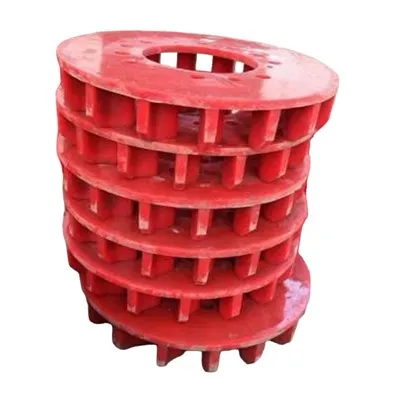
If you’re tired of parts seizing mid-run, wasting money on replacements, and dealing with contamination from off-gassing bits, hit us up. We can send you a test sample, walk through your exact application, and make sure you’ve got parts that hold up when the pressure’s low and the stakes are high. No sales pitch, no hidden fees, just parts that work when you need them most.
Pu Screen Mesh References
- Bhushan, B. (2013). Principles and Applications of Tribology, 2nd Edition. Wiley.
- Relative Performance of Wear-Resistant Materials in Vacuum and Space Environments. NASA Technical Report, 2018.
- Stott, F. H., & Wood, J. (1995). Wear Mechanisms in Low Pressure and Vacuum Conditions. Tribology International, Vol. 28, No. 3, pp. 181-188.
- Off-Gassing Characteristics of Tribological Coatings for Ultra-High Vacuum Applications. Journal of Vacuum Science & Technology A, 2020, Vol. 38, No. 4.
Yangzhou Yaye Wire Mesh Manufacturing Co., Ltd.
As one of the most professional wear resistant parts manufacturers in China, we have world-leading production equipment and strong manufacturing capabilities. Please feel free to wholesale cheap wear resistant parts in stock here from our factory. Also, free sample is available.
Address: No. 1 Jiangjia Road, High-tech Industrial Park, Jiangdu District, Yangzhou City, Jiangsu Province
E-mail: 13952515577@163.com
WebSite: https://www.yayescreen.com/
