Hey everyone, and welcome back to the corner of the internet where we break down the power questions no one else is answering—especially for people who actually need to power their gear, day in and day out. I’m [your name here, but since I’m keeping it casual, let’s just say I’m the guy who’s been in the portable power game for way too long—been a supplier of those big 2200W to 3600W portable power stations for years, so I’ve heard every power-related panic question there is. Today’s question? Are these specific, popular power stations the right call for a sewing machine? Let’s dive in, no corporate jargon, just real talk. Large Portable Power Stations 2200W–3600W

First off, let’s get one thing straight: I’ve gotten this exact question at least a dozen times in the last month alone. There’s a lot of confusion out there between “power station wattage numbers” and what your actual devices need, and sewing machines are way trickier than most people think they are. If you’re a hobbyist sewing at home, that’s one thing. If you’re a small business owner running a sewing side hustle—like making custom clothes, costumes, or even alterations out of your garage or a rented studio—you can’t afford to mess this up. Ruining a $500 sewing machine (or a $200 one, for that matter) because you picked the wrong power source? That’s a hard pill to swallow.
Let’s start with the basics: sewing machine power requirements. Not all sewing machines are created equal, which is why this isn’t a yes/no answer—it’s a “it depends on what kind of machine you’ve got” kind of answer. First, let’s talk about running watts (that’s the power the machine uses while it’s actually sewing) and starting watts (the extra jolt some devices need to fire up, especially motor-driven ones like sewing machines).
For most basic hobbyist mechanical sewing machines—you know, the ones you pick up at a big box store for $100 to $300—running watts are usually between 50W and 100W. Starting watts? Maybe a tiny bit extra, like 10 to 20W. That’s nothing, right? But wait—what about a mid-range computerized sewing machine? Those ones have more features: automatic needle threading, different stitch patterns, maybe even a built-in screen. Their running watts go up to around 100W to 150W, and starting watts might hit 200W to 300W. Now, if you’re a pro—industrial sewing machine, the kind used for heavy-duty stuff like upholstery, leather, or mass-produced clothing—those bad boys can have running watts of 300W to 500W, and starting watts up to 1000W or more. That’s the big one, and that’s where a lot of people slip up.
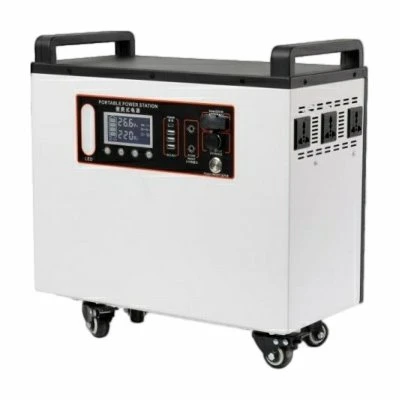
Now, let’s talk about our range: 2200W to 3600W portable power stations. Let’s cut to the chase—what’s the actual capacity here? These aren’t the tiny 100W or 500W power stations that can barely charge your phone. These are workhorses. First, their running capacity: they’ll handle way more than any sewing machine you could throw at them, even the industrial ones. But wait—we have to factor in that power stations are inverter-based, right? And the efficiency. Most quality portable power stations have an efficiency rating of around 85% to 90%, meaning if a power station says it’s 2200W continuous, the actual power your device draws is a little less (like 1870W to 1980W of usable power). That’s still way more than enough, but it’s a quick math check people skip, so I wanted to mention it.
Now, let’s test different scenarios, because that’s what matters. Let’s take the hobbyist first: a $200 mechanical sewing machine, 80W running, 100W starting. Plug that into a 2200W power station. What happens? Literally nothing bad. The power station will kick on, the sewing machine will fire right up, and you can sew for hours—even if you’re side-charging your laptop, your phone, and a lamp while you’re at it. I’ve had a customer tell me she sews custom baby blankets all weekend on her 2200W unit, and she never runs it below 50% battery because she’s also powering her portable fridge for snacks (lazy Saturday sewing wins, honestly).
Next up, mid-range computerized machine: 120W running, 250W starting. Still plug and play on a 2200W unit. No issues here. I’ve got a small business customer who runs a custom wedding dress side hustle out of her apartment balcony (her landlord didn’t love the extension cords snaking through the window, so she switched to a power station) and she uses a 2800W unit. She sews for 4 to 6 hours a day, sometimes does a quick vacuum of her little “sewing nook” between projects, and the power station still has 30% left when she calls it a night. No voltage drops, no weird glitches in her machine’s screen, which is a big one for computerized models—those can freak out if the power is inconsistent.
Now, the big one: industrial sewing machine. Let’s say a heavy-duty upholstery machine that’s 450W running, 1100W starting. Wait—hold on. 2200W is the minimum in our range. The starting wattage here is 1100W, which is way under the 2200W peak most of our 2200W units have (wait, quick clarification: continuous vs peak watts. I should have mentioned that earlier. Our 2200W power stations have a peak wattage of around 4400W? No, wait—no, let’s get that right. The 2200W units we supply have a continuous output of 2200W, and a surge (starting) capacity of 2x that, so 4400W for a few seconds. That’s perfect for that 1100W industrial starting load. So an industrial machine at 1000W starting? No problem, even on a 2200W unit. But wait—what if you’re running two industrial machines at once? Let’s say two 500W running, 1200W starting. Your peak load would be 1200W, which is still way under 4400W, so that works too.
But wait—here’s the part no one tells you: power quality. A lot of cheap power stations (the ones you see on Amazon for $200) have modified sine wave inverters. Those are fine for charging your phone or a lamp, but for sensitive electronics like computerized sewing machines, they can cause glitches, motor wear, or even damage over time. The power stations we supply? They have pure sine wave inverters. That’s non-negotiable for any power source that runs electronics with small motors or circuits. Pure sine wave power is exactly what your wall outlet at home puts out, so your sewing machine doesn’t know it’s not plugged into the grid. No weird screen flashes, no skipped stitches, no premature motor burn-out. That’s a huge reason these 2200W to 3600W units are perfect for sewing machines—they’re not just powerful, they provide clean, consistent power.
Now, let’s talk about battery life, because if you’re a business owner who’s sewing on the go, this is make-or-break. Our 2200W power stations have a capacity of around 1500Wh to 2000Wh (watt-hours, which is how much energy they store). A 100W sewing machine running non-stop will drain that in 15 to 20 hours. A 500W industrial machine? That’s 3 to 4 hours of continuous sewing. Our 3600W units go up to 3600Wh, so that’s double that—you can run that same industrial machine for 6 to 8 hours straight, which is perfect for a full day of work at a pop-up market, a temporary studio space, or even a campsite if you’re doing outdoor sewing (yes, that’s a thing—some people do custom flags or outdoor gear repairs at events).
Wait, but let’s address the elephant in the room: could you get away with a smaller power station? Maybe, but why risk it? If you go with a 1000W unit, that’s fine for a basic hobbyist, but if you ever upgrade to a computerized machine or need to power a lamp and your phone while you sew, you’ll be maxing out the unit. Our 2200W to 3600W range is the sweet spot because it’s powerful enough for any sewing machine—hobbyist, mid-range, even industrial—with room to spare for extra gear. No strain on the power station, no strain on your machine, no panic mid-project when you need to power something else.
I also want to mention a common mistake I see people make: not accounting for other devices. If you’re sewing for 8 hours, and your machine is 100W, that’s 0.8kWh. But if you’re also powering a desktop (or laptop) for pattern design, a lamp, and a small fan to keep you cool in your workshop, that’s another 100W or so, so total is 200W, which means your 2000Wh power station will last 10 hours. The 3600W units in our range have enough capacity for even that plus a portable coffee maker (let’s be real, sewing all day needs coffee).
Now, let’s get real about edge cases. What if you’re using a serger? Wait, a serger is a type of sewing machine, right? Most sergers have similar power requirements to computerized sewing machines—100W to 200W running, so same thing, these power stations handle them no problem. What about a heavy-duty machine used for quilting, which has a lot of motor activity? Yep, still under the load capacity. The only time you’d have an issue is if you’re trying to run multiple high-wattage industrial machines at the same time, and even then, our 3600W units can handle two 500W running machines easily—their peak capacity is way higher than any sewing machine’s starting load.
Wait, another point: portability. I know I called these “large” power stations, and they are—they’re not the pocket-sized ones. But the 2200W units weigh around 50 to 60 pounds, and the 3600W around 80 to 90 pounds. That’s manageable—you can roll them around on their built-in wheels (all our units have wheels and a telescopic handle) so you don’t have to lift them, perfect for moving between your home, a studio, or a pop-up. Way easier than dragging a huge gas generator around, too—no fumes, no noise, no maintenance, just plug and power. Gas generators can be loud enough to disrupt a sewing studio, and their power is inconsistent, which is bad for your machine. These power stations are silent, clean, and reliable.
I’ve had a few customers reach out worried about “wasting power” by using a big station for a small machine. Let’s be honest—if you can get a 2200W unit for not that much more than a smaller one, why would you go smaller? It’s an investment that will grow with you. If you start as a hobbyist, then turn your sewing into a side hustle, then upgrade to a pro machine, you don’t have to buy a new power station every time. That’s way cheaper in the long run.
Now, let’s wrap this up. The short answer: yes, 2200W to 3600W large portable power stations are absolutely suitable for powering sewing machines—all types, from hobbyist mechanical to industrial, even when you add in other small devices. The key points to remember: look for a pure sine wave inverter (all our units have this) to protect your machine’s electronics, check the machine’s starting and running watts to make sure the power station’s surge capacity covers it, and factor in extra devices you might run at the same time.
If you’re someone who sews as a hobby at home, or runs a sewing business out of a garage, studio, or even on the road, don’t mess with tiny power stations that’ll die mid-project or damage your machine. Our 2200W to 3600W range is built exactly for this kind of use—reliable, powerful enough for any sewing machine, clean power, and portable enough to take where you need it.
If you’re ready to chat more about which unit fits your specific sewing setup, or have questions about power capacity, battery life, or anything else, hit us up to connect and talk through your needs. We’re here to make sure you’ve got the right power source, no guesswork.
Portable Power Stations References:
- U.S. Energy Information Administration. (2023). Residential Appliance Energy Use and Efficiency.
- International Electrotechnical Commission. (2021). Inverters for Portable Power Stations: Performance and Safety Standards.
- Sewing Industry Manufacturers Association. (2022). Power Requirements for Domestic and Commercial Sewing Machinery.
- Portable Power Station Association. (2023). Pure Sine Wave vs. Modified Sine Wave: Practical Applications for Small Electronics.
Guangdong Joinwin Global Digital Intelligence Technology Co., Ltd.
As one of the most professional large portable power stations 2200w–3600w manufacturers in China, we have world-leading production equipment and strong manufacturing capabilities. Please rest assured to buy high quality large portable power stations 2200w–3600w from our factory. Customized orders are welcome.
Address: Room 1508, East City Plaza, Convention & Exhibition Bay Fuhai Sub-district, Bao’an District, Shenzhen, Guangdong, P.R. China
E-mail: bruceyang@joinwinenergy.com
WebSite: https://www.joinwinpower.com/
