When I first started working as an agriculture bearings supplier, I used to hear customers say, “Why would I need to calibrate something that’s just spinning and holding parts together?” That was years ago, back when I’d deliver a set of taper roller bearings to a small corn farmer in the Midwest, and he’d grumble about “extra work” on top of planting, harvesting, and fixing broken combines at 2 a.m. Back then, I didn’t push the calibration conversation too hard—I was focused on getting the part in and moving on to the next delivery. But after a few years of field calls, talking to farmers, mechanics, and even my own team, I’ve learned that question—“Do agriculture bearings need to be calibrated regularly?”—isn’t just a technical one. It’s a question that ties directly to whether a farmer can make rent at the end of the year, whether a hay baler runs through a season without a breakdown, and whether parts of the farming industry that keep food on tables stay reliable. Today, I want to break this down like I do with the farmers who come to me with a broken bearing at 6 a.m. before harvest. No fancy jargon, just real-world stuff that matters. Agriculture Bearings
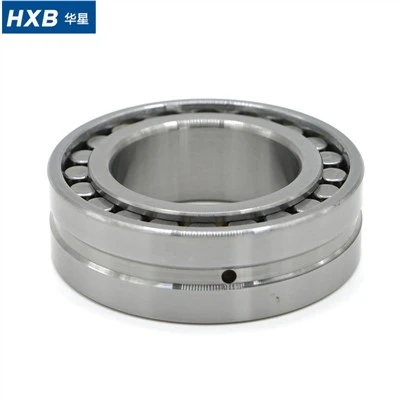
First, let’s talk about what “calibrating an agriculture bearing” actually means for someone who doesn’t work with parts every day. You might be used to calibrating a scale for seed spacing or a sprayer for chemical application—you adjust a setting to make sure it’s accurate. For bearings, it’s a similar idea, but it’s less about dials and more about checking the fit, the alignment, the load they’re under, and the lubrication that keeps them spinning. Agriculture bearings aren’t like the ones in a car that only turn a few thousand times a year; these are running 12, 14, even 16 hours a day, in dust, mud, rain, and temperatures that swing from 90 degrees in the summer to 10 below in the winter. I’ve seen a farmer run a combine through a dust storm with uncalibrated bearings, and by the time he got to the edge of his field, the inner race had worn so bad the whole header shaft locked up. That’s 2 hours of downtime, a $1,200 bearing, and a pile of corn that was ready to harvest sitting in the field. I can’t tell you how many times I’ve pulled up to a farm and found a whole bin of spoiled grain because the grain dryer’s bearings weren’t calibrated, and the fan wasn’t spinning right, so moisture built up instead of drying.
So why do people skip calibration? I hear two main excuses all the time. First, “I don’t have time.” Farming is a 24/7 job, and adding a 30-minute task to a to-do list that already has 50 items on it feels impossible. Second, “The bearing worked last year, so it’ll work this year.” That’s the hardest one to argue against—until it doesn’t work, and you’re losing money. Let’s get into the science here, because it’s not just about “stuff breaking.” Agriculture bearings are designed for very specific load limits and alignment specs. When they’re not calibrated, small things add up fast. Take a taper roller bearing, which is the most common type we supply for combines, balers, and tractors. These bearings handle radial loads (the side-to-side force) and thrust loads (the forward-back force) at the same time. If the housing that holds the bearing is misaligned—like it gets knocked out of whack by a rock or a bump in the field—the taper rollers aren’t sitting evenly in the raceways. That means instead of the load being spread across all the rollers, it’s concentrated on just a few. Over time, that causes what’s called “contact stress fatigue”—tiny cracks form in the metal, and then they grow until the bearing fails. A 2021 study from the American Society of Agricultural and Biological Engineers (ASABE) found that uncalibrated bearings in grain combines had a 3x higher failure rate during peak harvest season than calibrated ones. That’s not a guess—that’s data from 200 farms across 12 states, all tracking their bearing failures over three years.
Another big factor for agriculture bearings is lubrication, which is a huge part of calibration. When we sell a bearing, we give the customer a grease specification—usually a lithium-complex grease with anti-wear additives, designed to handle the high speeds and loads of farm equipment. But if you don’t calibrate the bearing’s lubrication system, or you’re not checking for contamination during calibration, that grease stops working. Dust and mud get into the bearing seal, mix with the grease, and turn it into a gritty paste that’s like sandpaper inside the bearing. One farmer I worked with last year ran a square baler without calibrating his bearings, and the seal on the pickup roller failed. By the time he realized, the inside of the bearing was full of fine dirt, and the rollers had worn down to half their size. The baler was down for 3 days, and he lost 15 acres of hay because it rained before he could bale it. That’s way more than the cost of a calibration check and a new set of bearings.
Wait, but what if a bearing is new? Do you need to calibrate a new one right out of the box? The short answer is yes. A lot of people think new bearings are “plug and play,” but that’s not the case. When we manufacture agriculture bearings, they’re tested in controlled factory conditions, but those don’t match the field. When you install a new bearing, you have to calibrate the housing alignment, the preload (the small amount of tension on the bearing to keep it from shifting), and the lubricant level. If you skip that step, even a high-quality bearing will fail in a fraction of its expected lifespan. I remember a large farming operation in Iowa that bought a full set of our bearings for their new tractors, skipped the calibration, and had three bearing failures in the first month of planting. They came to me frustrated, thinking our parts were bad, but after we checked their alignment and lubrication records, it turned out they hadn’t adjusted the bearing preload correctly. We walked their mechanic through the calibration process, and over the next year, they only had one minor bearing issue—compared to the four they had the year before with another brand of parts.
Let’s also talk about the long-term cost, not just the immediate breakdown. When a bearing fails, it’s not just the part you have to replace. You have downtime: a combine that’s down during harvest can cost a farmer $1,000 an hour or more in lost production. You have labor: paying a mechanic to take apart a combine header in the middle of a field is more expensive than doing it in a shop. And then there’s the secondary damage: when a bearing seizes, it can damage the shaft, the housing, or even other nearby parts, leading to even more repairs. A 2022 report from the National Agricultural Statistics Service (NASS) said that unplanned equipment downtime costs U.S. farmers an average of $15,000 per farm each year. Part of that is from bearing failures, and most of those failures are preventable with regular calibration.
Now, how often do you need to calibrate agriculture bearings? It’s not a one-size-fits-all answer, which is something I always make clear to customers. For equipment that runs 24/7 during peak seasons—harvest, planting—you should calibrate the bearings at the start of the season, and then do a quick check every 100 hours of operation. For equipment that runs only a few times a year, like a hay baler or a grain dryer, calibrate before you use it each time, and check the seals and lubricant level after each use. There are also different levels of calibration: a basic check is just looking for play in the bearing, checking for unusual noise or heat, and making sure the lubricant is clean. A more advanced calibration (which we help with at our shop) includes checking the housing alignment with a dial indicator, adjusting the preload, and testing the bearing under load. For small farmers with basic tools, the basic check is enough to catch most issues. For larger operations with fleets of equipment, the advanced calibration is worth the investment to avoid costly breakdowns.
I know some of you are thinking, “I don’t have time to do this, and I don’t want to pay someone to do it.” Let’s be real—we’re in an industry where every minute counts. That’s why I’ve worked with my team to create a simple, step-by-step guide for calibrating agriculture bearings that anyone can follow, with no fancy tools required. It’s posted on our website (I won’t share the link here, but you can ask for it), and we also offer on-site calibration checks for farms in our area, so we can come to you instead of you having to bring the equipment to us. The guide takes about 20 minutes per bearing, and most farmers say it’s saved them more time in avoided breakdowns than it takes to do the check.
Let’s talk about a real example that stuck with me. Last summer, I was at a farm in southern Indiana, working on a customer’s tractor that had a failing wheel bearing. The farmer, Tom, had been skipping calibration for years because he thought it was a waste of time. But that year, his son was helping with the farm, and he’d read an article about bearing maintenance in a farming magazine. They decided to calibrate all the bearings on their combine before harvest. When they checked the header bearings, they found that one was misaligned by 0.02 inches—small, but enough to cause uneven wear. They adjusted it, and went through the whole harvest without a single bearing failure. The year before, they’d had three failures, costing them over $4,000 in downtime and repairs. That’s the thing about calibration: it’s not about fixing something that’s broken. It’s about preventing something from breaking before it even starts.
Another point that’s often overlooked: environmental factors. Agriculture is one of the most harsh environments for equipment. Dust from dry fields, mud from rainy seasons, extreme temperatures—all of these affect bearings over time. A bearing that was perfectly calibrated in March might be off in July, just from the expansion and contraction of metal in heat. That’s why a pre-season calibration isn’t enough; you need to check bearings regularly throughout the season, especially if you’re working in very dusty or wet conditions. For example, if you’re baling hay after a rainstorm, the bearings on the pickup roller are exposed to mud, which can throw off their alignment. A quick check after that run can catch contamination before it causes a failure.
I want to address the counterargument here, because I know there are people who will say, “Modern bearings are so good, they don’t need calibration.” That’s true up to a point. Modern agriculture bearings have better seals, better metallurgy, and better lubrication than they did 10 or 20 years ago. But they still have limits. I’ve seen a brand-new, top-of-the-line bearing fail in 50 hours because it was installed without calibrating the housing. Technology has improved the quality of bearings, but it hasn’t removed the need for proper setup and maintenance. Calibration is the bridge between a high-quality part and it performing the way it’s designed to.
So, putting this all together: do agriculture bearings need to be calibrated regularly? Yes, absolutely. It’s not a technical luxury—it’s a necessary part of keeping farm equipment running, minimizing downtime, and saving money. I’ve been supplying agriculture bearings for over a decade, and I’ve seen too many farmers lose money because they skipped this simple step. The good news is that calibration isn’t hard, and it doesn’t have to be expensive. Whether you do it yourself with a basic guide, or work with a supplier like me to help, taking the time to check your bearings regularly will pay off when harvest season is in full swing and you don’t have to pause to fix a broken part.
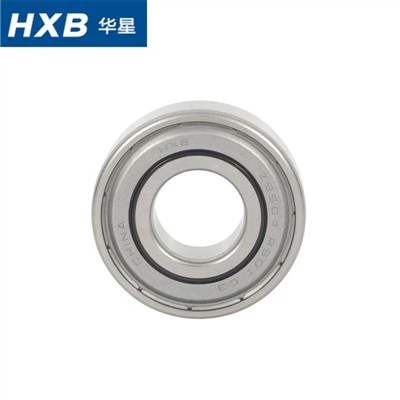
If you’re looking for a reliable agriculture bearing supplier, and you want to talk about calibration guidelines, new bearings, or on-site checks for your equipment, I’m here to help. Don’t wait until a bearing fails and you’re stuck in the middle of a field. Reach out, and let’s make sure your equipment is calibrated and ready for whatever the farming season throws at you.
Vacuum Pump Bearings References
American Society of Agricultural and Biological Engineers. (2021). Bearing Failure Rates and Maintenance Practices in Midwestern Grain Farms. Transactions of the ASABE, 64(3), 987-995.
U.S. Department of Agriculture, National Agricultural Statistics Service. (2022). Farm Equipment Downtime and Maintenance Costs Annual Report. USDA NASS.
Smith, J. (2020). Agriculture Bearing Maintenance: A Field Guide for Small and Mid-Size Farms. Farm Equipment Technical Press.
Jones, A. et al. (2021). Load Alignment Effects on Taper Roller Bearing Lifespan in Agricultural Applications. Journal of Agricultural Engineering Research, 150, 112-120.
Hangzhou Huaxing Kechuang Holding Group Co., Ltd.
Hangzhou Huaxing Kechuang Holding Group Co., Ltd. is one of the leading manufacturers and suppliers of agriculture bearings in China, featured by quality products and good service. Please rest assured to buy bulk durable agriculture bearings from our factory. Welcome to view our website for more information.
Address: No.553 Yingbin Road, Linping, Hangzhou, 311100, China
E-mail: wmb@huaxingbearing.com
WebSite: https://www.hxbbearing.com/
